
 Featured Machines
 Travel CPAPs
 Most Popular Masks
 Tubes and Hoses
 Humidifier Chambers
 Machine Filters
 Power Cords
 Headgear
 Nasal Pillows
 Cushions and Seals

Is AirCurve VAuto for Sleep Apnea Right for You?

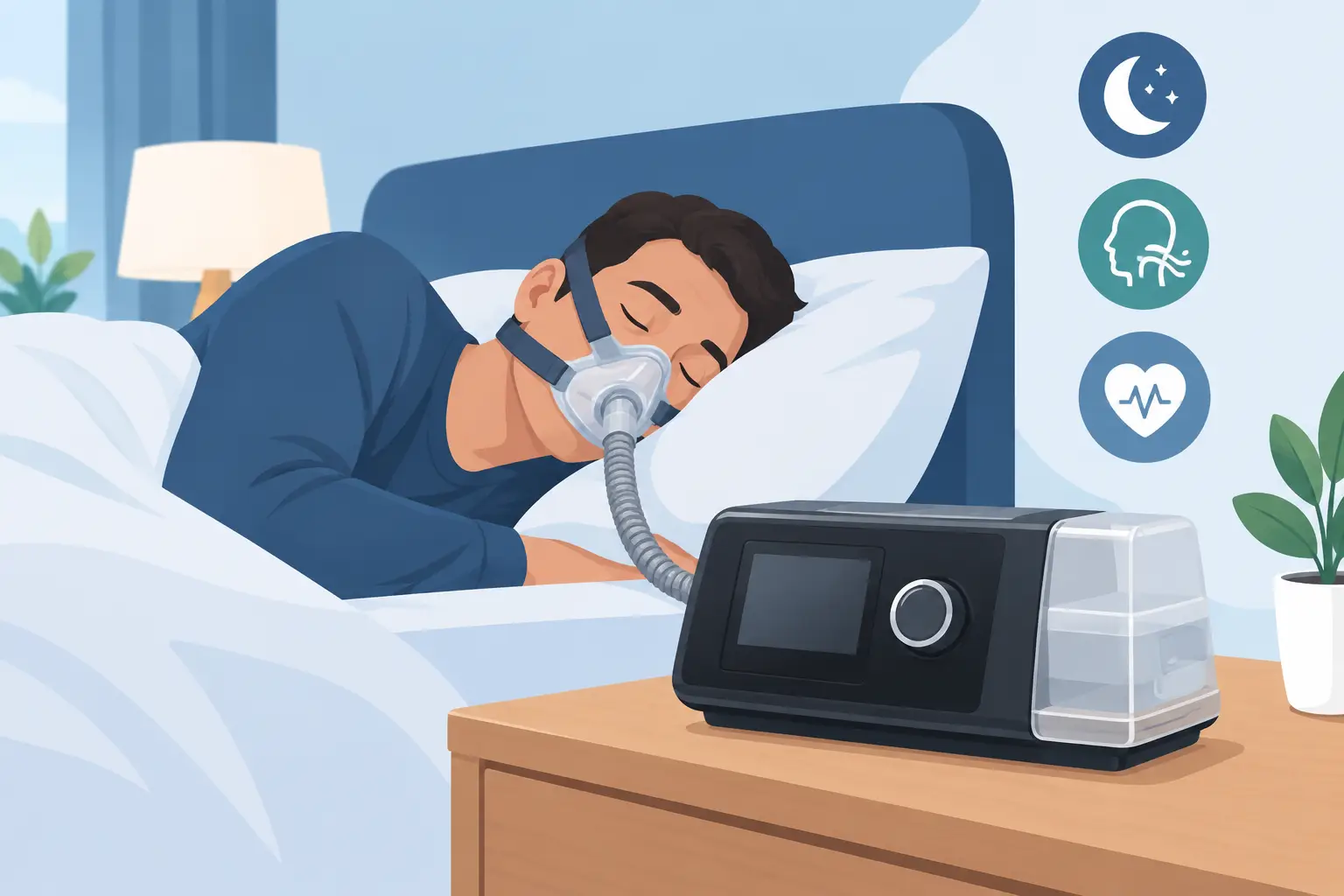
For some people, standard CPAP therapy feels like trying to breathe out against a steady stream of air. If that sounds familiar, an AirCurve VAuto for sleep apnea may be worth discussing with your sleep clinician. This prescription bilevel device is designed to make therapy feel more natural by delivering a higher pressure when you inhale and a lower pressure when you exhale.
That difference can matter when higher pressures are needed to keep the airway open, or when exhaling against CPAP pressure has made consistent treatment difficult. Better comfort does not mean less effective therapy. When it is prescribed and set up for your needs, bilevel therapy can help you stay with treatment long enough to experience the deeper, more rejuvenating sleep you have been missing.
What makes AirCurve VAuto different from standard CPAP?
A traditional fixed-pressure CPAP delivers one continuous pressure throughout the night. An auto-adjusting CPAP can vary that pressure as your needs change, but it still delivers a single pressure level for both inhaling and exhaling.
The ResMed AirCurve VAuto is a bilevel positive airway pressure device. It uses two pressure settings: inspiratory positive airway pressure, or IPAP, for breathing in, and expiratory positive airway pressure, or EPAP, for breathing out. The space between those settings is called pressure support. Put simply, the machine provides extra assistance on the inhale while easing pressure on the exhale.
Its VAuto algorithm can adjust expiratory pressure within the ranges prescribed by your clinician to respond to signs of upper-airway obstruction. Meanwhile, the prescribed pressure support remains in place to create a more comfortable breathing pattern. For people who need more pressure than they can comfortably tolerate on a conventional CPAP, that distinction can be meaningful.
The AirCurve VAuto is not automatically a better choice than an AutoSet or other CPAP machine. It is a different therapy category with a different purpose. Many people do very well with standard CPAP or APAP therapy, particularly when their mask fit, humidification, and settings are properly addressed first.
Who may benefit from AirCurve VAuto for sleep apnea?
The right device depends on your sleep study results, prescription, treatment history, and comfort needs. A clinician may consider bilevel therapy when obstructive sleep apnea requires relatively higher treatment pressures or when a patient has difficulty tolerating exhalation on CPAP.
You may want to ask about the AirCurve VAuto if you have tried CPAP consistently but still feel that breathing out is uncomfortable, wake up removing your mask, or struggle to use therapy for enough hours each night. It can also be a conversation worth having if your current pressure needs have changed with weight changes, nasal congestion, sleep position, or other health factors.
That said, discomfort is not always a sign that you need a new machine. A leaking full-face mask, overly tight headgear, dry air, worn cushions, or a clogged filter can make even well-prescribed therapy feel frustrating. Before replacing equipment, check the basics. Fresh supplies, heated humidification, and a mask style that matches how you breathe can often improve comfort significantly.
Certain breathing conditions require more specialized evaluation and equipment than a VAuto device. If you have central sleep apnea, significant chronic lung disease, heart failure, neuromuscular disease, or use supplemental oxygen, do not select a machine based on comfort features alone. Your sleep or respiratory clinician should determine the appropriate treatment plan.
Comfort features that support consistent therapy
A sophisticated device is only helpful if it fits into real life. The AirCurve VAuto is built with features intended to make nightly therapy more manageable, from its compact bedside design to its clear color display and intuitive controls.
Heated humidification can add moisture to therapy air and may help reduce dryness in the nose, mouth, or throat. Climate-control tubing, when prescribed and compatible with your setup, can help maintain comfortable temperature and humidity levels through the night. The best humidity setting is personal: too little may leave you dry, while too much can cause condensation in the tubing or mask.
The device also offers comfort settings that can make transitions into sleep feel gentler. Your clinician or equipment provider can help confirm that these features are adjusted appropriately. Avoid changing prescribed pressure ranges on your own. Small setting changes can affect treatment effectiveness, and data review is more useful when your therapy settings remain consistent.
Mask choice matters just as much as the machine. Nasal masks and nasal pillows can feel lighter for people who breathe comfortably through their nose. A full-face mask may be a better fit for habitual mouth breathers or those with frequent nasal congestion. There is no single best mask, only the one that seals well and feels comfortable enough for you to wear all night.
What to know before buying an AirCurve VAuto
The AirCurve VAuto requires a valid prescription. This protects you by ensuring that the device settings, pressure ranges, and therapy type are matched to your diagnosed condition. If your prescription has expired or your needs have changed, an online sleep consultation and prescription renewal may be a convenient path forward, depending on your clinical circumstances.
It is also wise to review insurance coverage before purchasing. Coverage rules vary by plan, deductible, diagnosis, and whether your insurer requires a rental period or specific documentation. Insurance verification can help clarify what your plan may cover and what your expected out-of-pocket cost could be. If you are purchasing directly, price matching and transparent product support can make the process easier to navigate.
When comparing options, look beyond the machine price. Ask what is included, whether you need a humidifier chamber or heated tubing, and which mask and supplies are compatible with your therapy. You will also need to replace disposable filters and, over time, masks, cushions, tubing, and headgear. Keeping up with these replacements supports a cleaner, more reliable treatment experience.
For customers who need a connected route from diagnosis to equipment, Pulmonary & Sleep Medicine Consultants can help simplify the steps with home sleep testing, virtual consultation options, prescription support, insurance assistance, and sleep therapy equipment. The goal is not to make sleep apnea treatment complicated. It is to help you breathe better, sleep deeper, and feel supported while you build a therapy routine that lasts.
Getting started with bilevel therapy at home
Your first few nights with a new bilevel device are an adjustment period. Give yourself time to get familiar with the mask and airflow while awake, such as when reading or watching television. This low-pressure practice can reduce the urge to remove the mask as soon as you lie down.
Create a simple bedtime routine: fill the humidifier chamber with distilled water if recommended for your setup, check that the tubing is connected securely, and inspect the mask cushion for dust, oils, or visible wear. If leaks start after a cushion has been working well, clean it and assess whether it is time for a replacement rather than immediately tightening the straps.
Pay attention to how you feel, but do not judge therapy on one night alone. Early improvement may show up as less snoring, fewer awakenings, better morning clarity, or more energy during the day. For some patients, progress is gradual. Device data and follow-up with your clinician can show whether your treatment is effectively controlling breathing events and whether comfort adjustments are needed.
If you develop persistent dryness, painful pressure points, significant aerophagia, ongoing leaks, or difficulty tolerating the device, contact your care team. These issues are common and often solvable. The most valuable sleep apnea machine is the one prescribed for your needs and comfortable enough to use consistently, night after night.