 Featured Machines
 Travel CPAPs
 Most Popular Masks
 Tubes and Hoses
 Humidifier Chambers
 Machine Filters
 Power Cords
 Headgear
 Nasal Pillows
 Cushions and Seals

Home Sleep Apnea Test CPT Code Explained

A home sleep apnea test CPT code may look like a string of billing language, but it can affect a very practical question: what will your sleep test cost, and will your insurance help cover it? If you are ready to address loud snoring, waking up short of breath, morning headaches, or constant daytime fatigue, understanding the code can make the path to answers feel much less confusing.
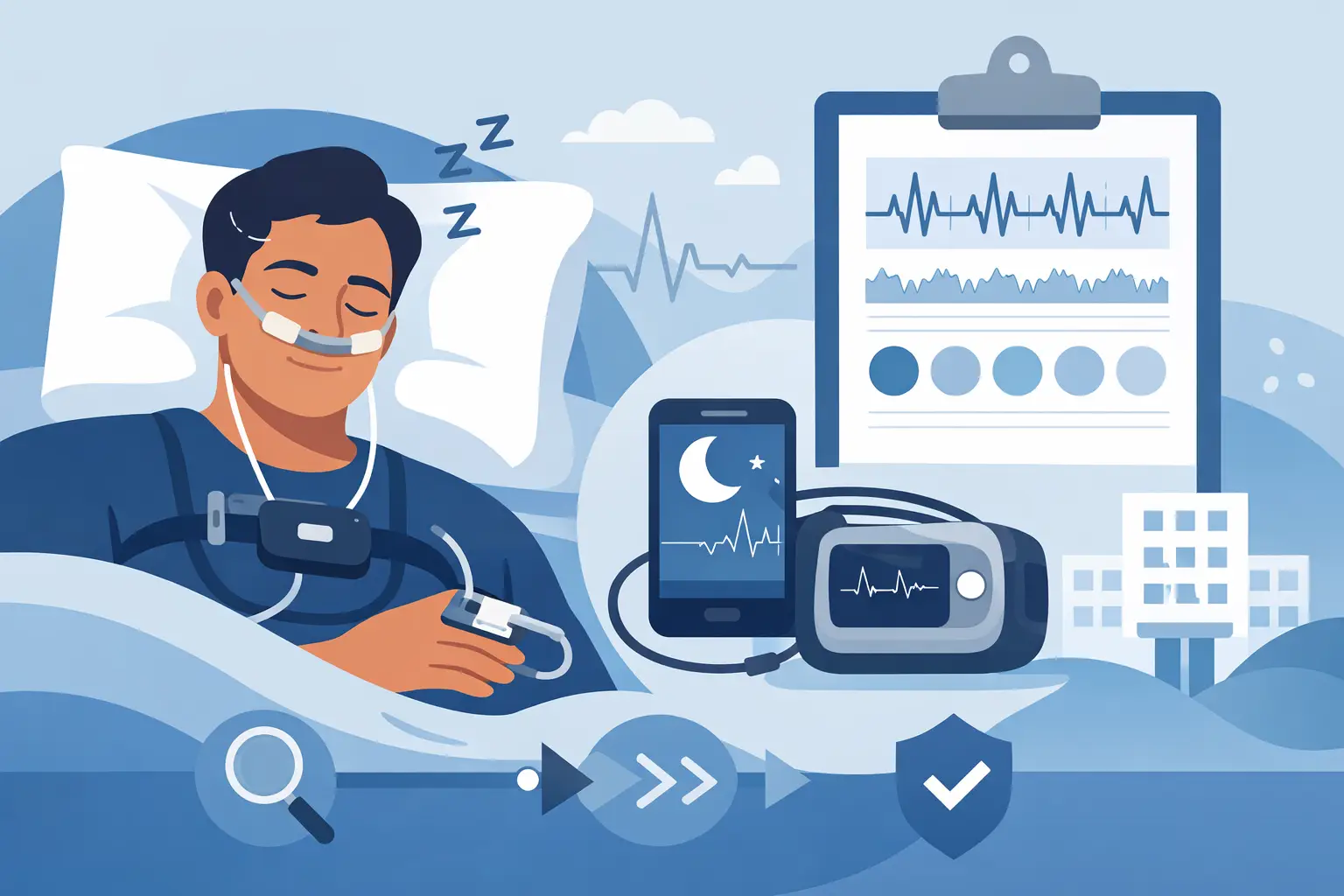
A home sleep apnea test, often called an HSAT, lets eligible adults complete a diagnostic sleep study in their own bed. The device typically tracks breathing patterns, oxygen levels, heart rate, airflow, and breathing effort. A qualified provider reviews the results and determines whether obstructive sleep apnea is present and what next steps may be appropriate.
What Is a Home Sleep Apnea Test CPT Code?
CPT stands for Current Procedural Terminology. CPT codes are standardized numbers used to describe medical services for billing and insurance purposes. They help an insurer identify what type of sleep study was ordered, how the test was performed, and whether it meets the plan’s coverage requirements.
For patients, the most useful thing to know is that a CPT code is not a diagnosis, a prescription, or a guarantee of coverage. It is a billing description. Your diagnosis may be obstructive sleep apnea, another sleep-related breathing condition, or no sleep apnea at all. The code simply identifies the testing service used to reach that answer.
A home test is different from an overnight sleep study in a sleep center. In-lab polysomnography uses more sensors and can measure sleep stages, brain activity, limb movements, and other factors. An HSAT is designed primarily to evaluate suspected obstructive sleep apnea in appropriate patients. It is usually more convenient and may be more affordable, but it is not the right test for every sleep concern.
Common Home Sleep Apnea Test CPT Codes
Several codes may appear when a home sleep test is billed. The exact code depends on the equipment, the number and type of signals recorded, the payer, and whether the service is billed under a private insurance plan or Medicare.
Common CPT codes include 95800, 95801, and 95806. These codes describe unattended sleep studies performed outside a traditional sleep lab, with differences in the data collected. For example, some studies include measurements such as oxygen saturation, heart rate, respiratory airflow, respiratory effort, and estimated sleep time. Other devices record a different combination or number of channels.
Medicare and some other payers may use HCPCS codes rather than standard CPT codes for home sleep testing. You may see G0398, G0399, or G0400 on an estimate, claim, or explanation of benefits. These generally refer to different categories of portable sleep-monitoring devices, from more detailed multi-channel monitors to simpler devices that measure fewer signals.
The important point is that there is no single code that applies to every at-home test. A provider and testing service should select the code that accurately reflects the study performed. If you are checking benefits in advance, ask your insurer which home sleep testing codes it recognizes and whether it has specific requirements for your plan.
CPT Codes vs. HCPCS Codes
It is easy to assume all medical billing codes are interchangeable. They are not. CPT codes are commonly used to identify medical procedures and professional services. HCPCS codes include other coding categories and are frequently used in Medicare billing.
If an insurance representative asks for a code, provide the one supplied by the testing provider or service. Do not try to choose a code based on a general internet search. Using the wrong code can lead to an inaccurate coverage estimate, even when the test itself would otherwise be eligible for benefits.
How Insurance Coverage Usually Works
Insurance coverage for a home sleep apnea test depends on your individual plan. Many insurers cover HSATs when there is a medical reason for testing and when the service meets the plan’s requirements. That may include an order from an authorized provider, a qualifying virtual or in-person evaluation, use of an approved testing provider, or prior authorization.
Even when a test is covered, you may still owe a deductible, copay, or coinsurance. A deductible means you may pay more out of pocket until you have reached the amount your plan requires before coverage begins. Coinsurance is usually a percentage of the allowed cost after your deductible is met.
Before moving forward, call the member-services number on your insurance card and ask whether home sleep apnea testing is covered under your plan. Confirm whether authorization is required, whether telehealth evaluations are eligible, and whether there are network restrictions. If you have an estimated CPT or HCPCS code from the service, share it with the representative and write down the call reference number.
For people without insurance, with high deductibles, or with limited network options, transparent self-pay pricing can be a useful alternative. The lowest advertised price is not always the lowest total cost, though. Check what is included: clinical evaluation, test shipping, result interpretation, follow-up guidance, and any documentation you may need for treatment.
When an At-Home Test Is a Good Fit
Home sleep apnea testing is often appropriate for adults with a high likelihood of uncomplicated obstructive sleep apnea. Common signs include persistent loud snoring, witnessed pauses in breathing, gasping during sleep, resistant high blood pressure, daytime sleepiness, and waking unrefreshed despite enough time in bed.
The convenience is meaningful. You can sleep in your own environment, avoid an overnight stay away from home, and complete the test around work and family commitments. For many people, that makes it easier to take the first step toward better breathing and deeper sleep.
Still, an HSAT has limits. It may not be the best choice if you have significant heart or lung disease, neuromuscular conditions, chronic opioid use, suspected central sleep apnea, severe insomnia, or symptoms that suggest another sleep disorder. An in-lab study may provide a clearer answer in these situations.
A negative or inconclusive home test does not always rule out sleep apnea. If symptoms remain strong, a provider may recommend additional testing. That is not a failure of the home test. It is a sign that your sleep concerns deserve a more complete evaluation.
What Happens After Your Results
If your study identifies obstructive sleep apnea, the next step is usually a treatment discussion with a qualified provider. CPAP therapy is a common and highly effective treatment. The machine delivers gentle, steady air pressure through a mask to help keep your airway open while you sleep.
Comfort matters when starting therapy. The right mask style, a well-fitted cushion, humidification settings, and a device that matches your needs can make treatment easier to use consistently. Auto-adjusting CPAP machines can respond to changing pressure needs through the night, while heated humidification and climate-control tubing can help reduce dryness and irritation.
You will generally need a valid prescription to purchase a CPAP or bilevel device. If an existing prescription has expired, online prescription renewal options may help eligible patients continue therapy without unnecessary delays. Affordable Sleep Solutions supports a home-based path from testing and prescription needs to dependable PAP equipment and replacement supplies.
Questions to Ask Before You Order a Test
A little preparation can prevent frustrating billing surprises. Ask whether the listed price includes the provider review and formal interpretation, not just the device shipment. Find out how results are delivered, how quickly they are reviewed, and what happens if the test does not collect enough usable data.
If you plan to use insurance, ask whether the service can check benefits before testing and whether it will provide documentation for a reimbursement claim if needed. Also confirm whether your state permits the telehealth and testing pathway being offered. Privacy is worth asking about as well: your health information should be collected and handled securely.
Finally, ask what support is available if you have trouble placing the sensors or understanding your results. Home testing should feel approachable, not like you have been handed a technical project at bedtime.
A billing code should never be the reason you put off care when you are exhausted, snoring heavily, or worried about disrupted breathing. Get clear answers about coverage, choose a testing path that fits your health needs, and take the next step toward nights that feel calmer and mornings that feel more restored.