 Featured Machines
 Travel CPAPs
 Most Popular Masks
 Tubes and Hoses
 Humidifier Chambers
 Machine Filters
 Power Cords
 Headgear
 Nasal Pillows
 Cushions and Seals

Can You Get a CPAP Prescription Online in the US?

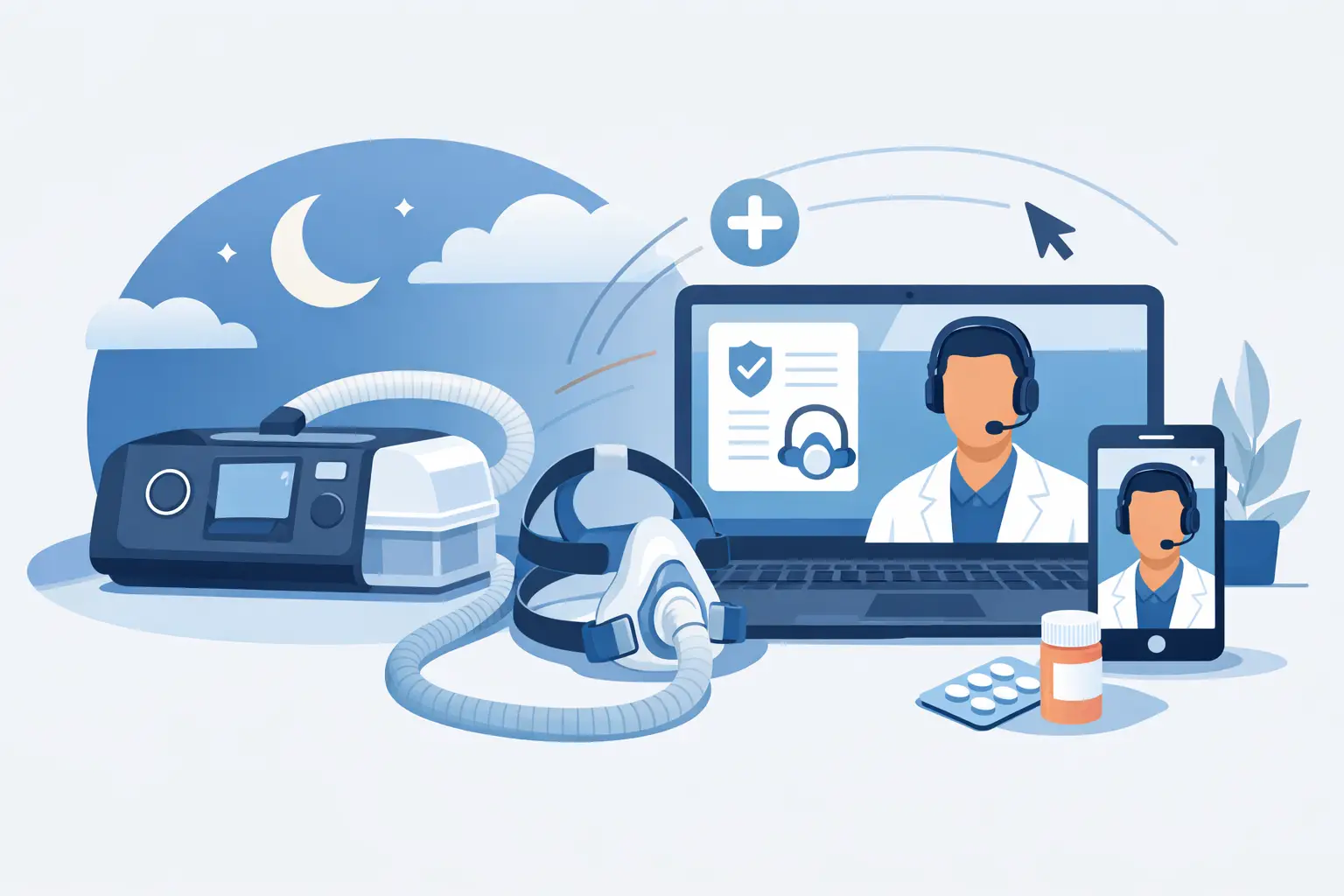
A restless night can spill into every part of the next day – the morning headache, the afternoon slump, the struggle to stay alert behind the wheel or during a meeting. If snoring, gasping, or daytime fatigue has become part of your routine, you may be asking: can you get a CPAP prescription online? For many US adults, the answer is yes, provided the prescription comes from a qualified, state-licensed healthcare provider after an appropriate evaluation.
Online sleep apnea care can make the path to better rest feel far more manageable. Rather than trying to coordinate multiple in-person appointments, many people can complete a virtual consultation, take a home sleep apnea test when clinically appropriate, review their results remotely, and receive prescription support from home.
Can You Get a CPAP Prescription Online?
A CPAP machine is a prescription medical device in the United States. That means a retailer cannot simply sell you a new CPAP, APAP, or bilevel machine without a valid prescription. An online form by itself is not a prescription, and a legitimate service should not promise a machine without involving a licensed medical provider.
What can happen online is the clinical process surrounding the prescription. A provider may review your existing sleep study and prescription, discuss your symptoms and therapy history through a telehealth visit, or order and interpret a home sleep apnea test when it fits your needs. If the provider determines CPAP therapy is appropriate, they can issue or renew a prescription in accordance with the laws and telehealth requirements in your state.
This approach can be especially helpful if you already use PAP therapy but your prescription has expired, your current machine is aging, or you need documentation to purchase a replacement device. It can also be a practical first step for people with suspected obstructive sleep apnea who want answers without the added burden of an overnight lab visit.
What an Online CPAP Prescription Process Usually Includes
The exact process depends on whether you have already been diagnosed. Still, a trustworthy online pathway should feel clear, private, and centered on your care – not rushed.
If you already have a sleep apnea diagnosis
If you have a prior sleep study, keep a copy ready if possible. The report helps the provider understand the type and severity of your sleep apnea, along with any pressure recommendations from your original evaluation. You may also be asked about your current machine, mask comfort, pressure tolerance, humidifier use, and whether your symptoms have changed.
For an existing CPAP user, a virtual prescription renewal can be a straightforward option when a provider determines it is clinically appropriate. Affordable Sleep Solutions offers a digital prescription-renewal option for $99.99, designed to help eligible patients move forward with replacement equipment without adding unnecessary friction to their care.
Your provider may prescribe a fixed-pressure CPAP, an auto-adjusting PAP device often called APAP, or another form of PAP therapy based on your clinical history. The prescription generally identifies the device type and pressure settings or range needed for treatment.
If you have symptoms but no diagnosis
Online care may begin with a sleep-focused health questionnaire and a telehealth consultation. Be ready to discuss snoring, witnessed pauses in breathing, waking up short of breath, morning headaches, daytime sleepiness, high blood pressure, and any health conditions that affect your breathing or sleep.
For many adults with suspected uncomplicated obstructive sleep apnea, a home sleep apnea test may be an appropriate next step. The testing device is used in your own bed, then the recorded data is reviewed by a qualified provider. If the results support an obstructive sleep apnea diagnosis and PAP therapy is recommended, the provider can issue a prescription.
Home testing is convenient, but it is not right for every situation. A provider may recommend an in-lab sleep study instead if you have certain heart or lung conditions, possible central sleep apnea, significant insomnia, neuromuscular disease, complex symptoms, or a previous home test that did not give a clear answer. That is not a setback. It is how care stays personalized and safe.
What You Need Before Ordering a CPAP Machine
Once you have a valid prescription, you can choose equipment that matches your treatment needs and sleep habits. Your prescription is the clinical starting point; comfort and practical features shape your day-to-day experience.
A fixed-pressure CPAP delivers one prescribed pressure throughout the night. An APAP adjusts within a prescribed range as your breathing needs change, which can be useful for people whose pressure needs vary by sleep position, congestion, or sleep stage. Bilevel devices provide different pressures for inhaling and exhaling and are typically prescribed for more specific needs.
The machine matters, but the mask often determines whether therapy feels sustainable. Nasal masks, nasal pillow masks, and full-face masks each have advantages. A full-face mask may make sense if you breathe through your mouth at night, while nasal pillows can feel less bulky for some side sleepers. If you wake with dry mouth, congestion, or rainout in the tubing, heated humidification and climate-control tubing may improve comfort.
A prescription does not mean there is only one acceptable setup. It gives you the treatment parameters. You can still select a compatible machine, mask style, tubing, humidifier chamber, and replacement supplies that fit your preferences and budget.
How to Tell Whether an Online Service Is Legitimate
Convenience should never mean cutting corners with your health information or treatment. Before sharing personal details, look for a process that explains who will evaluate you, whether the provider is licensed in your state, and what happens if a home test is not appropriate or results are inconclusive.
A credible provider will ask real clinical questions and give you a way to ask your own. They should be transparent about pricing, prescription eligibility, secure handling of health information, and what equipment is or is not included. Be cautious of any company that claims to diagnose sleep apnea from a short quiz alone or guarantees a prescription before a provider has reviewed your situation.
If you are using insurance, it also helps to check your plan’s requirements before you begin. Some plans have specific rules around testing, providers, deductibles, compliance documentation, or equipment suppliers. Insurance coverage can be useful, but it is not always the lowest-cost or fastest route. Comparing your covered cost with transparent self-pay pricing can help you make a confident decision.
When an In-Person Appointment May Be Better
Telehealth has made sleep apnea care more accessible, but online care is not the answer to every sleep concern. Seek urgent medical attention for severe shortness of breath, chest pain, fainting, or other emergency symptoms. A CPAP prescription process is not a substitute for emergency care.
You may also benefit from in-person evaluation if your symptoms do not fit a typical obstructive sleep apnea pattern, if you have struggled with PAP therapy despite multiple adjustments, or if you believe another condition is affecting your sleep. Persistent insomnia, unusual nighttime movements, severe restless legs symptoms, and narcolepsy-like sleep attacks may need a broader sleep evaluation.
For many people, however, virtual care is a comfortable middle ground: expert guidance without making sleep treatment harder to access. You can receive appropriate evaluation, keep your information secure, and move toward equipment that supports better breathing at night.
A Prescription Is the Start of Better Sleep, Not the Finish Line
Receiving a prescription is a meaningful step, but the real goal is consistent, comfortable therapy. Give yourself time to adjust. Use your machine during every sleep period, including naps when possible, and address mask leaks, dryness, or pressure discomfort early rather than trying to push through them.
Restorative sleep often comes from small, practical improvements made over time: a mask that fits well, fresh cushions and filters, the right humidity setting, and support when a question comes up. With the right clinical guidance and equipment, better nights can begin right at home.