
 Featured Machines
 Travel CPAPs
 Most Popular Masks
 Tubes and Hoses
 Humidifier Chambers
 Machine Filters
 Power Cords
 Headgear
 Nasal Pillows
 Cushions and Seals

Nasal Versus Full Face Masks: Which Fits You?

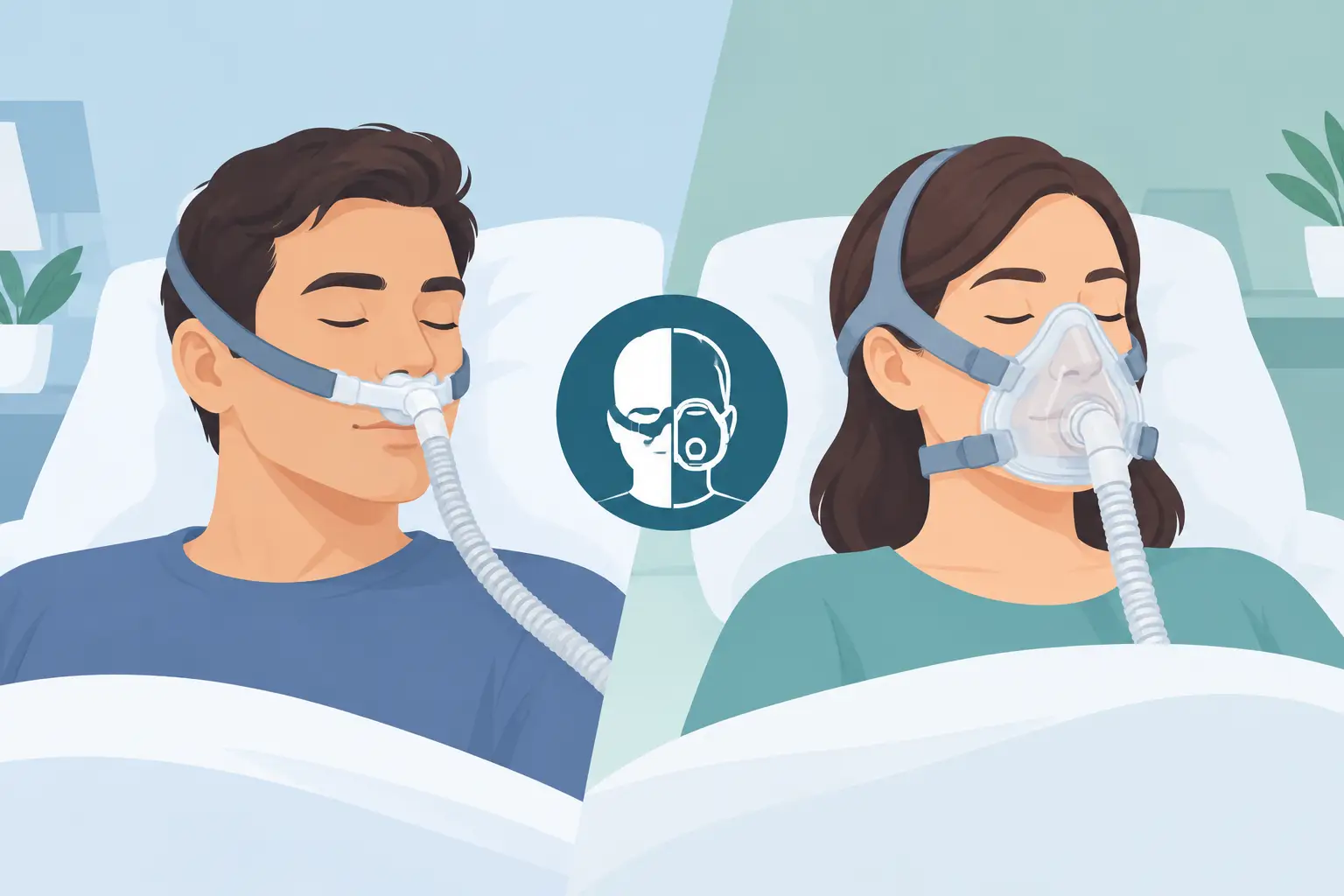
The right CPAP mask should make treatment feel easier to continue, not harder to tolerate. When comparing nasal versus full face masks, the best choice usually comes down to one simple question: Can you comfortably breathe through your nose for most of the night?
That answer affects more than comfort. It can influence mask leaks, dry mouth, how freely you move while sleeping, and whether your therapy remains consistent enough to help you wake feeling rested. Both mask styles can deliver effective treatment for obstructive sleep apnea. The goal is not to find the universally “best” mask. It is to find the one that fits your breathing habits, pressure needs, and bedtime routine.
Nasal versus full face masks: the key difference
A nasal mask covers the nose only. It sits over the bridge and around the base of the nose, delivering pressurized air through the nostrils. Nasal pillow masks are an even smaller variation, using soft cushions that rest at the entrance to the nostrils rather than covering the entire nose.
A full face mask covers both the nose and mouth. It is designed to maintain your prescribed airflow whether you breathe through your nose, your mouth, or both during sleep. For people who regularly wake with a dry mouth or cannot keep their mouth closed overnight, that broader coverage can be a meaningful advantage.
Neither design is automatically more comfortable. A well-fitted full face mask can feel secure and reassuring, while a poorly fitted nasal mask can leak and interrupt sleep. At the same time, many people find a nasal option less noticeable because it has less surface area against the face. The details of fit matter just as much as the category.
When a nasal mask may be the better choice
Nasal masks are often a comfortable starting point for people who naturally breathe through their nose at night. Their smaller profile can make it easier to read in bed, wear glasses, or sleep on your side. Less facial coverage also means less material against the skin, which some users appreciate if they feel confined by larger masks.
For many CPAP users, a nasal mask provides a good balance of stable therapy and a lighter feel. It may be especially appealing if you move frequently in your sleep but still want a mask that feels more secure than nasal pillows. Nasal pillows may suit people who prefer the most minimal design possible, although they can feel too direct for some users at higher pressure settings.
A nasal mask may be a strong option if you:
- Usually breathe comfortably through your nose while awake and asleep
- Prefer a smaller mask with a more open field of vision
- Sleep on your side or change positions often
- Have facial hair that makes a broad seal harder to maintain
- Feel claustrophobic in masks that cover the mouth
There is one important condition: nasal breathing needs to remain reasonably clear. Seasonal allergies, a cold, chronic congestion, or structural nasal concerns can make a nasal-only mask feel frustrating. Heated humidification, saline rinses, and treatment for allergies may help some people, but persistent blockage is worth discussing with a qualified clinician.
When a full face mask may be the better choice
A full face mask is often the practical choice for mouth breathers. If you wake with a dry mouth, hear air escaping from your lips, or have been told that you sleep with your mouth open, a nasal mask may lose therapy air before it can do its job. A full face mask gives that air a reliable path whether it enters through the nose or mouth.
This style can also offer more dependable treatment when nasal congestion is frequent or unpredictable. You do not have to abandon therapy because of a stuffy nose from allergies or a short-term illness. For many people, that flexibility brings peace of mind.
Full face masks can be a particularly good fit for people using higher CPAP or bilevel pressure settings. The larger cushion and broader seal can feel more stable when airflow is stronger, although this depends on the individual mask design and fit. Some users also simply prefer the security of a mask that covers both breathing pathways.
The trade-off is size. Full face masks generally have more contact points, more headgear, and more opportunity for leaks if the cushion is not positioned correctly. They can also leave marks on the face if straps are overtightened. A mask should be snug enough to seal, not cinched down. Over-tightening often makes leaks worse by warping the cushion.
Comfort is about fit, not just mask type
A common mistake is assuming that a leak means you chose the wrong kind of mask. Sometimes it does. More often, the issue is a cushion size, headgear adjustment, sleeping position, or worn-out supply.
Start by fitting the mask while sitting upright with your machine running at your prescribed pressure or using its mask-fit feature, if available. Gently position the cushion against clean, dry skin, then adjust the straps in small, even increments. Lie down afterward, because facial contours and headgear tension can change once you are in your usual sleep position.
If air leaks toward your eyes, the cushion may be sitting too high, the straps may be too loose or too tight, or the cushion may be past its useful life. If leaks occur around the mouth with a full face mask, try repositioning the lower edge of the cushion and checking that the mask size matches your facial shape. Do not ignore persistent leaks. They can cause noise, dry eyes, disrupted sleep, and less effective therapy.
Skin comfort deserves attention, too. Wash the cushion regularly according to its care instructions to remove facial oils that can weaken the seal. Give your face a few minutes after applying moisturizer before putting on the mask, since heavy products can interfere with silicone. If soreness, rashes, or pressure marks continue, a different cushion size or mask style may be more appropriate.
Your sleep habits can help decide
Your usual sleeping position offers useful clues. Side sleepers often prefer nasal masks or nasal pillows because there is less mask to press into a pillow. That said, many modern full face masks are designed with a lower-profile frame and can work well for side sleeping when paired with a supportive CPAP pillow or a pillow position that keeps the cushion from being pushed sideways.
People who sleep on their back may have flexibility with either option, provided the seal remains stable. Stomach sleepers often need a particularly low-profile mask and careful tubing placement. Routing tubing above the head, when the mask allows it, can reduce tugging as you turn.
Think about your nighttime routine as well. If you like to read or watch television before sleep, a nasal mask may leave more room for glasses. If you often experience nasal congestion or know you breathe through your mouth, the convenience of a full face mask may outweigh its larger footprint.
What to do if you are not sure
If you are new to CPAP, begin with an honest assessment of how you breathe at night, not how you wish you breathed. Mouth breathing is common and does not mean you are doing therapy wrong. It simply helps guide the right equipment choice.
A chin strap may help some nasal-mask users keep their mouth closed, but it is not the best answer for everyone. It should not feel restrictive, and it will not resolve significant nasal obstruction. If dry mouth, leaking, or poor sleep continues despite reasonable adjustments, a full face mask may be more comfortable and more effective.
For established CPAP users, a change in comfort can be a signal to reassess supplies. Cushions, headgear, tubing, and filters wear over time. Replacing worn components can restore a secure seal without requiring an entirely new mask. If you are changing mask styles, confirm that your selected mask is compatible with your machine and that your therapy settings remain appropriate.
Choose the mask you will actually wear
The most effective CPAP mask is the one that helps you use therapy consistently through the night. A nasal mask can offer a lighter, less obtrusive experience for clear nasal breathers. A full face mask can provide welcome reliability for mouth breathers, people with frequent congestion, and those who need stable coverage at higher pressures.
Give yourself time to adjust, but do not settle for ongoing discomfort. With the right fit, the right replacement supplies, and clinical guidance when needed, CPAP therapy can feel far more natural. Better breathing at night is not just about the mask on your bedside table. It is about giving yourself a more rejuvenating morning and the energy to feel present for the day ahead.