
 Featured Machines
 Travel CPAPs
 Most Popular Masks
 Tubes and Hoses
 Humidifier Chambers
 Machine Filters
 Power Cords
 Headgear
 Nasal Pillows
 Cushions and Seals

How to Adjust CPAP Humidity Settings for Comfort

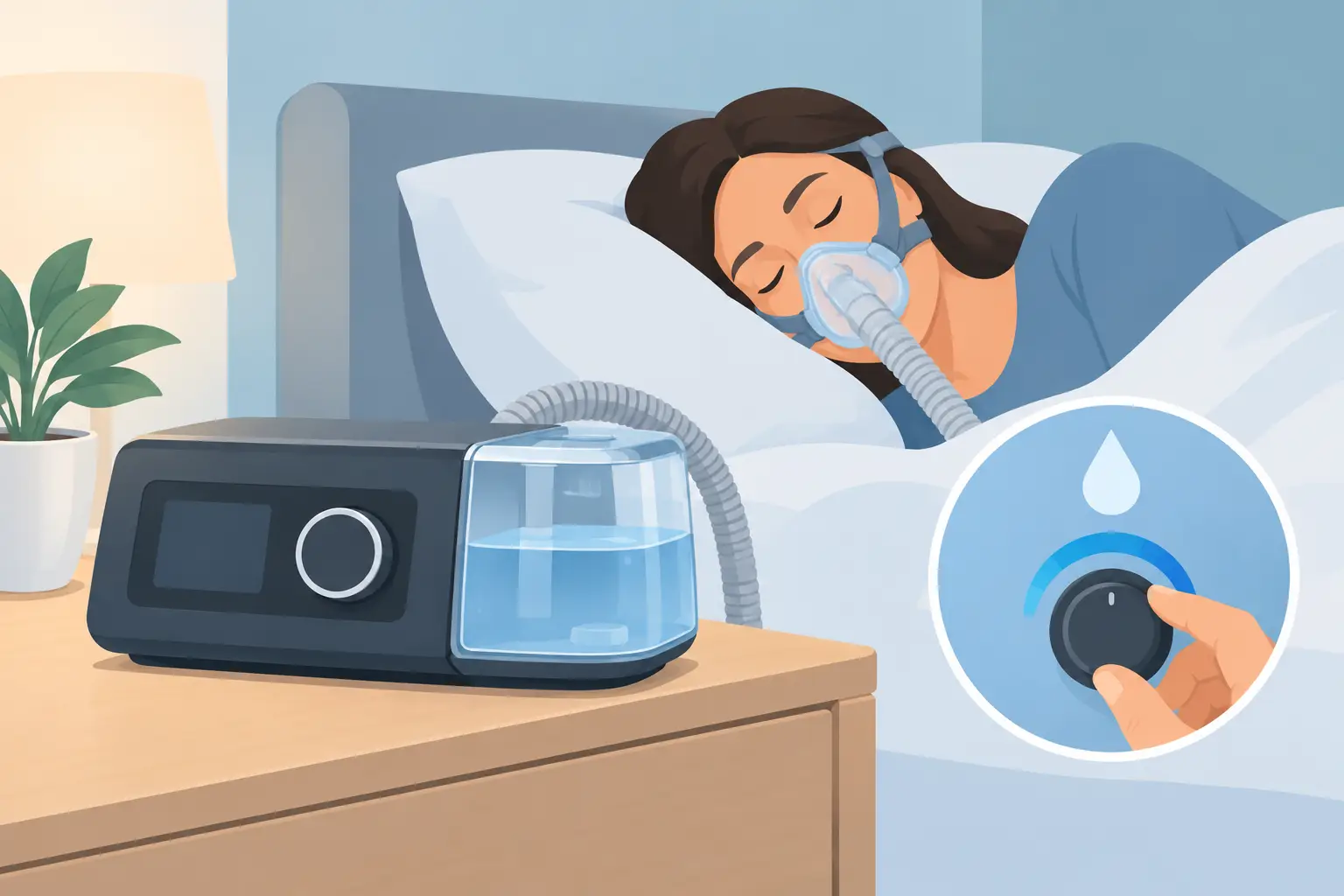
Waking with a dry mouth, stuffy nose, or water droplets in your CPAP mask can make a treatment that protects your health feel harder than it should. Learning to adjust CPAP humidity settings can often make therapy more comfortable without changing the pressure prescribed for your sleep apnea. The right setting is personal: it depends on your home, your mask, your breathing habits, and how your nose and throat feel in the morning.
Heated humidification adds moisture to the air delivered by your CPAP machine. For many people, that moisture eases nasal dryness and irritation so they can breathe better and sleep deeper. But more humidity is not always better. Too much can create condensation in the tubing, while too little may leave you uncomfortable enough to remove your mask overnight.
Why CPAP Humidity Matters
CPAP therapy moves air continuously through your mask to keep your airway open. That airflow can feel drying, especially during the winter, in air-conditioned rooms, or when you breathe through your mouth. A humidifier chamber gently warms water and adds moisture to the therapy air before it reaches you.
Comfort has a real role in treatment success. If a dry nose, sore throat, or runny nose repeatedly interrupts your sleep, you may use your device for fewer hours than recommended. Finding a comfortable humidity level can help make your nightly routine feel more restorative and sustainable.
Humidity settings do not treat sleep apnea on their own, and they are separate from prescribed CPAP pressure settings. Avoid changing pressure settings unless your clinician has directed you to do so. Humidity is a comfort feature that you can usually fine-tune carefully from night to night.
How to Adjust CPAP Humidity Settings
Start with the setting recommended in your machine instructions or by your care team. Many current CPAP devices offer a humidity scale, often with lower numbers providing less moisture and higher numbers providing more. Some models also offer automatic climate control, which adjusts humidity and tube temperature based on room conditions.
Make only one small change at a time. If you wake with a dry mouth, dry nose, or scratchy throat, raise the humidity by one level and use that setting for two or three nights. If you notice water in the mask or tubing, lower the humidity by one level. A gradual approach makes it easier to identify what actually helps.
Use distilled water in the humidifier chamber unless your device instructions say otherwise. Distilled water helps reduce mineral buildup and supports regular cleaning. Fill the chamber to the indicated maximum line before bed, but do not overfill it. Empty remaining water each morning, allow the chamber to air-dry, and clean it according to the manufacturer’s care instructions.
If you have dry mouth or a dry throat
Increasing humidity may help, but first consider whether air is escaping through your mouth. This is especially common for people using a nasal mask or nasal pillows. A large mouth leak can dry your mouth even when the humidifier is set high.
Check your nightly therapy data, if your machine provides it, and pay attention to mask fit. A full-face mask may be more comfortable for regular mouth breathers. If you use a nasal mask, talk with your sleep care team before adding a chin strap or changing mask style. The goal is a comfortable, secure seal, not a tighter mask.
If your nose feels congested or irritated
Dry indoor air may call for a modest increase in humidity. Yet nasal congestion can have several causes, including allergies, a cold, or mask leaks. If raising humidity makes you feel more stuffy, step it back down. Some people feel best with moderate humidity rather than the highest setting.
A properly fitted mask, clean filters, and a clean humidifier chamber also matter. Dust, worn supplies, and a poor seal can affect comfort in ways that humidity alone cannot solve.
If you see water in the tubing or mask
This is often called rainout. It happens when warm, humid air cools as it travels through the tubing, turning moisture into droplets. You may hear gurgling in the tube or feel water splashing against your face. It is uncomfortable, but it does not mean your device has failed.
First, lower the humidity setting slightly. If your device has a heated tube, increasing the tube temperature can keep the air warm enough to reduce condensation. Keep the CPAP machine lower than your bed when possible so any condensation is less likely to travel toward your mask. A tubing cover may also help in a cool bedroom.
Do not place the machine where it can be knocked over, and never use a damaged humidifier chamber. If rainout continues despite reasonable adjustments, ask for help with your machine setup and compatible accessories.
Let Your Bedroom Guide the Setting
Your ideal setting may change throughout the year. A bedroom that is cool and dry in January may require more humidity than the same room in July. Travel can change the equation too. Hotel air conditioning, high-altitude destinations, and dry climates can all affect how therapy air feels.
Consider your room temperature before turning humidity all the way up. High humidity paired with a cold bedroom is more likely to cause rainout. If you prefer a cool room for sleep, a heated tube or tubing cover may be a better comfort solution than simply lowering humidity until your nose feels dry.
Automatic settings can be convenient, particularly for users who do not want to make frequent adjustments. Still, manual settings may offer more control if you know exactly what is bothering you. Neither approach is universally better. The best option is the one that keeps you comfortable and using therapy consistently.
Check the Simple Things Before Making Big Changes
When humidity suddenly feels wrong, inspect your equipment before assuming you need a new setting. Make sure the water chamber is seated correctly, the lid is closed, and the tubing connections are secure. Look for cracks in the chamber, holes in the tubing, or a mask cushion that has become worn or stiff.
Replace disposable filters on schedule and keep reusable components clean as directed. A dirty filter or aging mask cushion can contribute to discomfort and leaks. CPAP supplies are not one-time purchases: regular replacement supports cleaner, more dependable therapy and a better seal.
If you use a travel CPAP, check whether it has a compatible humidification option. Some travel devices prioritize compact size and may not include the same integrated humidifier features as a bedside machine. Planning for nasal comfort before a trip can make it easier to maintain therapy away from home.
When to Contact Your Sleep Care Team
A few nights of adjustment are normal. Ongoing symptoms deserve clinical attention. Contact your sleep care provider if you have persistent nasal bleeding, significant sinus pain, skin breakdown, severe dryness that does not improve, or repeated trouble wearing your mask through the night.
Reach out as well if you suspect your pressure is uncomfortable, your machine reports frequent large leaks, or you continue to feel excessively sleepy despite regular use. Those concerns may require a mask fitting, equipment review, or discussion with a qualified clinician rather than another humidity adjustment.
If your prescription has expired or you need support continuing therapy, Pulmonary & Sleep Medicine Consultants can help connect the clinical and equipment sides of your care through convenient online services. The right machine, mask, tubing, and humidification setup should work together to support a more rejuvenating night’s sleep.
Your humidity setting does not have to be perfect on the first try. Give yourself a few nights, make small changes, and pay attention to how you feel when you wake. A comfortable CPAP routine is one you are far more likely to keep – and every consistent night of treatment is a step toward better-rested days.