
 Featured Machines
 Travel CPAPs
 Most Popular Masks
 Tubes and Hoses
 Humidifier Chambers
 Machine Filters
 Power Cords
 Headgear
 Nasal Pillows
 Cushions and Seals

How Often Replace CPAP Filters? A Clear Schedule

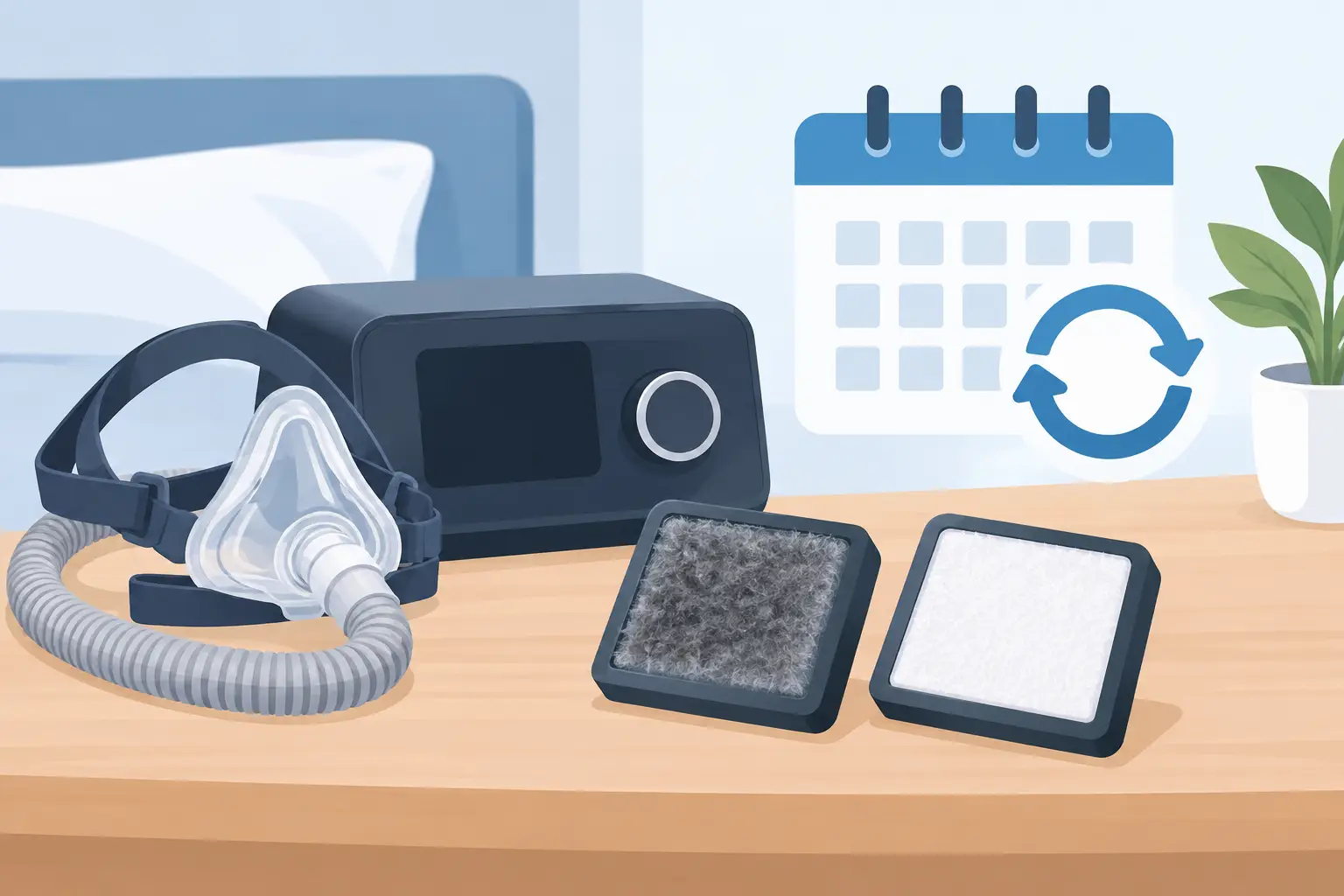
A CPAP filter is easy to overlook because it is small, quiet, and out of sight. But it protects the air moving through your machine every night. If you are wondering how often replace CPAP filters, a practical rule is to inspect the filter monthly and replace a disposable filter at least every 1 to 6 months, depending on your machine, home environment, and the manufacturer’s instructions.
For many CPAP users, replacing filters is one of the simplest ways to support clean, comfortable therapy. A fresh filter helps keep dust, lint, pet dander, and other household particles from entering the machine’s air intake. That can help your equipment run as intended and make each night of therapy feel more refreshing.
How Often Should You Replace CPAP Filters?
There is no single schedule that fits every CPAP machine or every home. Your machine’s user guide should always be your primary reference, since filter designs differ by brand and model. Still, most standard disposable CPAP filters should be checked every month and replaced when they appear discolored, dusty, damaged, or clogged.
For many ResMed CPAP and bilevel machines, including popular AirSense and AirCurve models, the standard disposable filter is commonly replaced about every six months under normal conditions. That schedule may be too long if you live with pets, have seasonal allergies, use your machine in a dusty room, or notice visible buildup sooner.
A more useful approach is to pair a calendar reminder with a quick visual inspection. Hold the filter up in good light. If it looks gray, yellowed, covered in debris, or no longer resembles a clean filter, replace it. Filters are a low-cost supply, and changing one early is generally preferable to continuing with a filter that is visibly dirty.
Disposable vs. Washable CPAP Filters
Before cleaning or replacing anything, confirm which type of filter your device uses. This matters because not every filter can be washed.
Most modern CPAP machines use a disposable fine filter. These are designed to be removed and replaced, not rinsed. Washing a disposable filter can damage its material and may reduce how well it captures particles. If your filter is made of paper-like or fibrous material, treat it as disposable unless your machine instructions specifically say otherwise.
Some older devices or certain machine systems use reusable foam filters, sometimes alongside a disposable fine filter. A washable foam filter may need rinsing every one to two weeks and complete air-drying before it goes back into the machine. Never reinstall a damp filter. Moisture inside the filter compartment can affect the equipment and create an environment you do not want near your therapy air pathway.
If your machine uses both a foam filter and a fine disposable filter, keep up with both schedules. The foam filter catches larger particles, while the finer filter provides an additional layer of filtration.
What Makes a CPAP Filter Get Dirty Faster?
Your filter replacement schedule may need to be more frequent than the standard recommendation. The air in your bedroom has a direct effect on what your CPAP filter collects.
Pet owners often need to inspect filters more often, particularly if a dog or cat sleeps in the room. Pet hair and dander can accumulate quickly, even in a clean home. Seasonal pollen, construction dust, smoke exposure, open windows, and a bedroom near a busy road can also shorten filter life.
A filter may also become dirty faster if the machine sits on the floor, near an air vent, or beside fabrics that shed lint. Placing your CPAP on a clean bedside table, with the air intake unobstructed, can help reduce buildup. Keep the area around the machine clear of curtains, bedding, and clutter that may block airflow.
If you travel with a CPAP, check the filter when you return home. Hotel rooms, vacation rentals, and changing climates can expose the machine to different levels of dust and allergens. Travel CPAP users may not need a new filter after every trip, but a quick inspection is a smart part of unpacking.
Signs It Is Time for a New Filter
A calendar schedule is helpful, but the condition of the filter should guide your decision. Replace it sooner if you see dirt, discoloration, tears, or warping. A filter that no longer fits flat and secure in its compartment should also be replaced.
You may notice that the outside of your machine looks dusty or that the air intake area has collected lint. That is a good prompt to inspect the filter and wipe the exterior of the machine according to its cleaning instructions.
Do not assume that congestion, dry throat, or a change in sleep quality always means the filter is the cause. Those symptoms can have several explanations, including mask leak, humidity settings, allergies, or a need to review your therapy setup. Still, a dirty filter is an easy maintenance issue to rule out first.
Why Filter Changes Matter for Your CPAP Therapy
Your CPAP machine draws room air through the filter before delivering pressurized air through the tubing and mask. The filter helps protect the machine from airborne debris and supports a cleaner air pathway. It is not a substitute for regular cleaning of your mask, tubing, humidifier chamber, and other recommended supplies, but it is an essential part of the overall routine.
A heavily soiled filter can restrict air intake. While a CPAP machine is designed to compensate for normal use, there is no benefit to making it work harder against a clogged filter. Keeping the filter clean supports the dependable performance you need for consistent therapy.
For people with allergies or pets at home, timely filter changes can feel especially worthwhile. CPAP therapy should help you breathe better and sleep deeper, not add another concern to your nighttime routine.
A Simple CPAP Filter Routine That Sticks
The easiest replacement plan is the one you will actually follow. Set a monthly reminder to check the filter at the same time you clean your humidifier chamber or review your other replacement supplies. Keep a small reserve of compatible filters at home so you are not left waiting for a shipment when one needs to be changed.
When replacing a filter, turn off and unplug the machine if your device instructions recommend it. Open the filter cover, remove the old filter, and insert the new one in the proper orientation. Make sure the cover closes securely. Do not force a filter that does not match your exact machine model.
It also helps to write the replacement date on your supply calendar or phone. Over time, you will learn whether your household needs a new filter every month, every few months, or closer to the manufacturer’s standard interval.
Can You Use Your CPAP Without a Filter?
You should not run your CPAP without the proper filter in place. Operating the device without one can allow dust and debris into the machine. If you discover a missing, damaged, or soaked filter at bedtime, use the manufacturer’s guidance and replace it as soon as possible rather than trying to improvise with household materials.
Do not use tissues, cotton, paper towels, or cut-to-size materials as a replacement filter. They are not designed for your machine and may interfere with airflow or shed fibers into the device.
Finding the Right Replacement Filter
CPAP filters are not universal. A filter made for an AirSense device may not fit an AirMini travel CPAP, and a filter designed for one manufacturer may not work with another. Before ordering, check your machine name and model number, then choose the compatible filter type.
If you are unsure which replacement supply fits your setup, support can help you identify the right option before you buy. Pulmonary & Sleep Medicine Consultants can also help make ongoing therapy supplies easier to manage alongside prescription and insurance questions.
A clean filter is a small part of your routine, but it supports something much bigger: comfortable, consistent therapy that helps you wake up ready for the day. Check yours this month, keep a spare on hand, and give your machine the clean air intake it was designed to have.