
 Featured Machines
 Travel CPAPs
 Most Popular Masks
 Tubes and Hoses
 Humidifier Chambers
 Machine Filters
 Power Cords
 Headgear
 Nasal Pillows
 Cushions and Seals

APAP Versus Fixed Pressure Therapy Compared

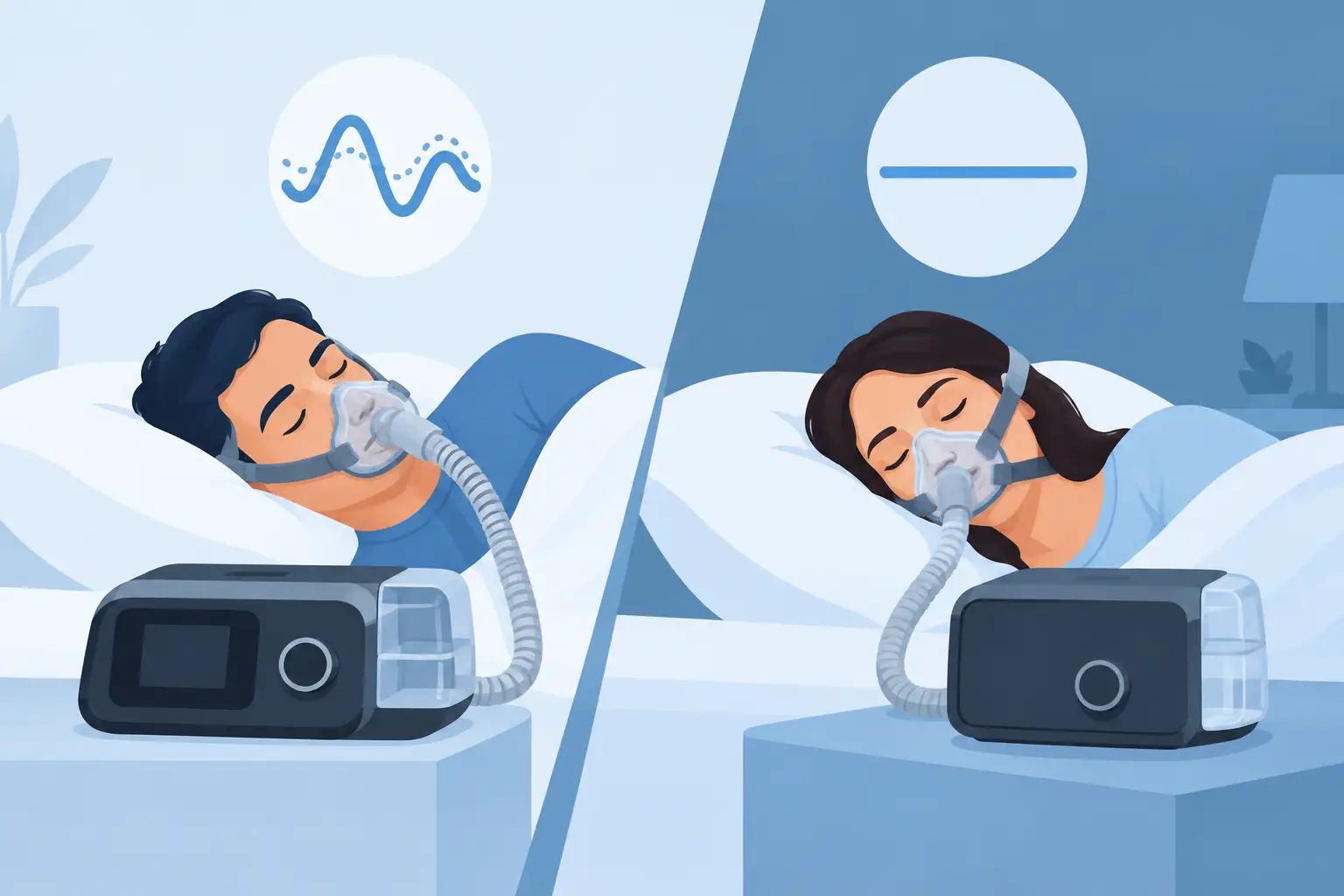
Waking up with a dry mouth, a mask leak, or the feeling that your CPAP pressure is working against you can make treatment feel harder than it should. The question of APAP versus fixed pressure therapy is really a question of how your treatment can support steadier breathing while fitting more comfortably into real life. Both approaches can treat obstructive sleep apnea effectively when prescribed appropriately. The right choice depends on your breathing patterns, health history, comfort needs, and the guidance behind your prescription.
APAP Versus Fixed Pressure Therapy: The Basic Difference
Fixed pressure CPAP delivers one prescribed pressure throughout the night. If your provider determines that 10 cm H2O keeps your airway open, the machine delivers that pressure during inhalation and exhalation, night after night. This straightforward approach has been used successfully for decades.
APAP, or automatic positive airway pressure, works within a prescribed pressure range. For example, a clinician may set a machine to operate between 6 and 14 cm H2O. The device monitors signals associated with airway narrowing, snoring, flow limitation, and apnea events, then raises or lowers pressure within that range as needed.
Neither option is automatically better for every person. APAP is not simply “stronger,” and fixed CPAP is not outdated. Each is a different way to deliver the pressure needed to help prevent obstructive breathing events.
Why Pressure Needs Can Change Overnight
Sleep apnea is rarely identical from one hour to the next. Your pressure needs may rise when you roll onto your back, enter REM sleep, experience nasal congestion, drink alcohol, or have changes in body weight. On a quiet night spent mostly on your side, you may need less pressure.
APAP can respond to many of these ordinary variations. It may operate at a lower pressure for much of the night and increase only when the machine detects signs that your airway needs more support. For some users, spending less time at a higher pressure can reduce discomfort, dry mouth, aerophagia, or mask leaks.
Fixed pressure therapy takes a different approach. The prescribed setting is usually selected to cover the pressure you need during your more vulnerable periods, such as REM sleep or back sleeping. That consistency can feel reassuring, especially for people who prefer a stable, predictable airflow sensation.
What APAP Can Offer
APAP is often appealing for newly diagnosed patients because it can accommodate night-to-night changes without requiring constant manual adjustments. It can also be useful when a clinician needs therapy data to better understand a person’s pressure requirements over time.
Many current APAP devices include comfort features such as ramp settings, expiratory pressure relief, heated humidification, and detailed therapy reporting. Features like these can make it easier to settle into treatment and stay consistent with it. A machine’s automatic adjustments are designed to work quietly in the background, not to interrupt your rest.
APAP may be a good fit when obstructive sleep apnea varies substantially by sleep position or sleep stage. It can also make sense for people whose needs are changing due to weight changes, recovery from certain health events, or fluctuating nasal congestion. Still, the pressure range must be prescribed thoughtfully. A range that is too wide or poorly matched to your needs may allow events to occur before the machine reaches an effective pressure.
What Fixed Pressure CPAP Can Offer
Fixed CPAP remains an excellent treatment option for many people. Once an effective pressure has been established, a single setting can provide dependable therapy with a simpler pressure pattern. Some users find that they sleep better when the airflow does not change during the night.
Consistency can be especially valuable for people who are sensitive to pressure shifts, wake easily, or feel unsettled by automatic adjustments. Fixed CPAP may also be recommended after an APAP trial shows that one pressure is reliably effective.
For a person with stable pressure needs, fixed therapy does not mean settling for less comfort. Modern fixed-pressure machines can still offer heated humidification, ramp options, exhalation relief, quiet operation, and a wide selection of masks. The mask fit, humidity level, and comfort settings often matter just as much as the therapy mode.
Comfort Is More Than a Pressure Setting
It is understandable to focus on the number on the screen, but successful treatment is built on more than pressure. A well-fitting nasal mask, nasal pillow mask, or full-face mask can change your experience dramatically. Leaks can cause noise, dry eyes, disrupted sleep, and inaccurate therapy data, regardless of whether you use APAP or fixed CPAP.
If you breathe through your mouth or often wake with a dry mouth, a full-face mask or clinician-approved strategies to manage mouth leak may help. If you feel claustrophobic, a smaller nasal cushion or nasal pillows may feel more natural. Heated humidification can ease dryness and congestion, while a heated tube can help control condensation.
Pressure-related bloating, called aerophagia, deserves attention too. It may improve with a mask adjustment, different sleep position, humidity changes, or a review of your pressure settings. Do not lower or alter prescribed settings on your own just to solve discomfort. A small setting change may affect how well your airway stays open.
When APAP Is Not the Best Choice
Automatic therapy is helpful for many people with uncomplicated obstructive sleep apnea, but it is not appropriate for everyone. Your clinician may recommend a different approach if you have central sleep apnea, significant chronic lung disease, hypoventilation, certain neuromuscular conditions, or specific heart and respiratory concerns.
If you use supplemental oxygen, have complex breathing events, or have been prescribed bilevel therapy, your treatment needs may go beyond a standard APAP or fixed CPAP decision. In those situations, device selection and settings should be guided closely by a qualified sleep or respiratory clinician.
An APAP machine also cannot replace follow-up care. It records useful data, but the numbers need context. A low event count does not always explain persistent fatigue, frequent awakenings, large leaks, or discomfort. Your sleep quality and daytime symptoms still matter.
How to Make a Confident Choice
Start with your prescription and diagnosis. Your provider may prescribe APAP with a specific pressure range, fixed CPAP at one pressure, or another type of PAP therapy based on your sleep study and clinical history. A valid prescription is required to purchase a PAP device, and it should clearly identify the therapy type and settings.
Then consider your daily experience. If your sleep position changes often, congestion is common, or your pressure needs appear to vary, APAP may offer useful flexibility. If you already know that one pressure works well and prefer a steady airflow sensation, fixed pressure therapy may be the more comfortable option.
Device data can help refine the decision. Look at treatment consistency, leak levels, residual events, and how rested you feel. A device report should support a conversation with your care team, not become a reason to self-prescribe changes. The goal is not to chase a perfect number. It is to create effective therapy you can use every night.
Getting Started Without Adding More Stress
If your prescription has expired, your symptoms have changed, or you are unsure which machine matches your therapy order, a virtual sleep consultation can provide a practical next step. Home sleep apnea testing and online prescription renewal options may make it easier to move forward without unnecessary office visits, while insurance verification can clarify available coverage before you purchase equipment.
At Pulmonary & Sleep Medicine Consultants, patients can move from clinical support to compatible therapy equipment and replacement supplies in one connected process. Whether you need a new machine, a replacement mask cushion, filters, tubing, or humidification supplies, choosing parts that fit your prescribed setup protects both comfort and treatment performance.
The best PAP therapy is the one that keeps your airway supported and feels manageable enough to use consistently. With the right clinical guidance, a comfortable mask, and settings matched to your needs, you can breathe better, sleep deeper, and give your days a more rested start.