
 Featured Machines
 Travel CPAPs
 Most Popular Masks
 Tubes and Hoses
 Humidifier Chambers
 Machine Filters
 Power Cords
 Headgear
 Nasal Pillows
 Cushions and Seals

CPAP Versus Oral Appliance: Which Fits You?

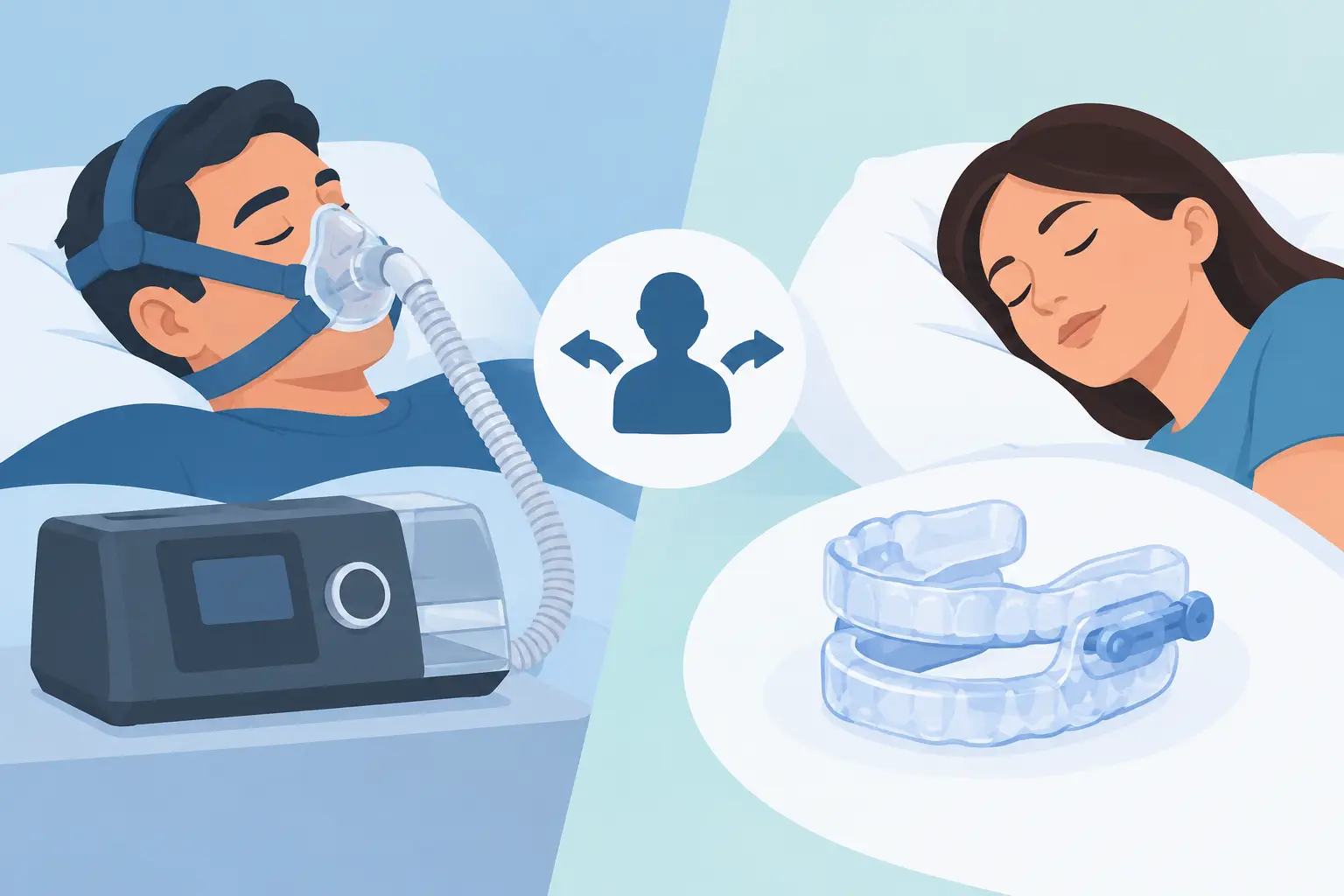
A treatment decision can feel personal when it affects how you sleep every night. In the CPAP versus oral appliance conversation, the best choice is not simply the smallest device or the most familiar option. It is the therapy that addresses your type and severity of sleep apnea, fits your health needs, and gives you a realistic path to consistent, rejuvenating sleep.
For many adults with obstructive sleep apnea, CPAP remains the most effective and dependable treatment. An oral appliance can be a valuable alternative for certain patients, particularly when CPAP is not tolerated or when apnea is mild to moderate. The right next step starts with a sleep evaluation and a conversation with a qualified clinician.
CPAP Versus Oral Appliance: The Core Difference
CPAP, short for continuous positive airway pressure, uses gentle pressurized air to keep the airway open while you sleep. A CPAP machine delivers air through tubing and a mask, preventing the repeated airway collapse that causes breathing pauses, oxygen drops, snoring, and fragmented sleep. Many current devices can automatically adjust pressure as your needs change throughout the night, and features such as heated humidification can make therapy feel more comfortable.
An oral appliance is a custom-fitted device worn in the mouth, similar in appearance to a sports mouthguard or retainer. The most common type moves the lower jaw slightly forward. That position can help create more room in the upper airway and reduce obstruction during sleep.
Both options aim to help you breathe better and sleep deeper. Their effectiveness, fit, and daily experience are different.
Why CPAP Is Often the First-Line Treatment
CPAP is widely considered the standard treatment for moderate to severe obstructive sleep apnea because it is highly effective when used consistently. It does not rely on repositioning the jaw alone. Instead, it provides enough airflow to splint the airway open, helping prevent obstructive events across a range of sleep positions and stages.
This matters for people whose breathing disruptions are frequent, whose oxygen levels drop significantly, or who have health concerns that can be worsened by untreated sleep apnea. Those concerns may include high blood pressure, heart disease, diabetes, atrial fibrillation, or serious daytime sleepiness. A clinician may strongly recommend CPAP when more reliable control of apnea is needed.
Modern CPAP therapy is also more adaptable than many people expect. Auto-adjusting machines can respond to changing pressure needs. Nasal masks, nasal pillows, and full-face masks give patients options based on their breathing patterns and comfort preferences. If dry mouth or nasal dryness has been a barrier, a heated humidifier may help. A properly fitted mask and a pressure setting reviewed by a clinician can make a meaningful difference.
The trade-off is that CPAP requires equipment, a power source, routine cleaning, and a period of adjustment. Some people struggle with mask leaks, congestion, claustrophobic feelings, or removing the mask during sleep. These challenges are common, but they are often solvable with the right mask style, humidification, pressure adjustments, and supportive follow-up.
When an Oral Appliance May Be a Good Option
A custom oral appliance may be appropriate for adults with mild to moderate obstructive sleep apnea, as well as patients with severe apnea who cannot tolerate CPAP despite reasonable efforts to make it work. It can also be considered for people whose apnea occurs mainly when sleeping on their back, depending on their sleep study results and clinical evaluation.
Many patients are drawn to oral appliances because they are compact, quiet, and easy to carry. There is no tubing, machine, or bedside setup. For frequent travelers, that simplicity can be appealing. Some people also find an oral appliance easier to wear than a mask, which may improve how often they use it.
However, convenience does not automatically mean the appliance is the better treatment. Oral appliances generally reduce apnea less consistently than CPAP, especially in people with more severe disease, higher body weight, substantial oxygen desaturation, or complex airway anatomy. A device that is comfortable but does not adequately control breathing events may leave you exposed to the effects of untreated sleep apnea.
A true sleep apnea oral appliance should be custom made and fitted by a qualified dentist with experience in dental sleep medicine. Over-the-counter mouthguards, boil-and-bite devices, and products marketed for snoring are not substitutes for medically supervised therapy. They may not treat apnea and can cause discomfort or bite changes when used improperly.
Comfort Is About More Than Device Size
It is easy to assume an oral appliance is always more comfortable because it is smaller. In reality, comfort is individual. Some people experience jaw soreness, tooth discomfort, dry mouth, excess saliva, or changes in how their teeth fit together with an oral appliance. These effects may improve with adjustment, but they deserve attention.
CPAP comfort depends heavily on the setup. A full-face mask may be helpful for someone who breathes through their mouth, while a nasal pillow mask may feel lighter for someone who prefers minimal facial coverage. A mask should seal without being painfully tight. If you wake with leaks, pressure marks, or dry airways, that does not mean CPAP has failed. It may mean your equipment or settings need attention.
Consistency is the shared goal. The treatment that works only occasionally cannot provide the same benefits as a therapy you use through the night, every night. Your sleep clinician can review both effectiveness and adherence rather than treating comfort and clinical results as separate issues.
Cost, Prescriptions, and Follow-Up Care
CPAP equipment requires a prescription in the United States. The prescription helps ensure that the machine settings and equipment are appropriate for your diagnosis. Depending on your insurance plan, coverage may be available for CPAP equipment and ongoing supplies, although requirements, deductibles, and documentation rules vary.
An oral appliance also involves professional care. The overall cost can include evaluation by a qualified dental provider, the custom device, fittings, adjustments, and follow-up visits. Dental and medical insurance coverage for oral appliance therapy varies widely. Before committing, ask what documentation is needed and what portion of the treatment may be your responsibility.
Neither therapy should be treated as a one-time purchase. CPAP masks, cushions, filters, tubing, and humidifier chambers need regular replacement to support a clean, comfortable seal and dependable airflow. Oral appliances need dental follow-up to check fit, jaw health, tooth movement, and whether the device remains effective.
How to Choose the Right Sleep Apnea Treatment
Your sleep study should guide the decision. It measures more than snoring. It can show how often breathing stops or narrows, how low oxygen levels fall, whether events are worse in certain positions, and whether other sleep-related breathing concerns may be present.
Start by considering the severity of your apnea and any related health risks. CPAP is often the clearest choice when apnea is moderate to severe or when oxygen levels are affected. If you have mild to moderate apnea and want an alternative to CPAP, an oral appliance may be worth discussing with your sleep provider and a qualified dental sleep specialist.
Your daily routine matters, too. A person who travels often may use a travel CPAP or plan ahead for a portable oral appliance. Someone with chronic nasal congestion may need humidification, nasal treatment, or a full-face mask. A person with jaw pain, dentures, loose teeth, or significant dental concerns may not be an ideal oral appliance candidate.
It is also reasonable to revisit treatment if your first option is not working. Sleep apnea therapy is not a test of willpower. It is a medical treatment that should be refined until it supports your comfort and health. Pulmonary & Sleep Medicine Consultants can help eligible patients move from home sleep testing and virtual clinical guidance to prescription support and compatible CPAP equipment in one connected care experience.
Do You Need a Follow-Up Sleep Test?
A follow-up sleep test is often recommended after an oral appliance has been fitted and adjusted. This confirms whether the device is actually controlling apnea, not just reducing snoring. Snoring can improve while obstructive events still occur, so how you feel alone is not always enough to judge success.
CPAP devices can provide useful therapy data, but clinical follow-up still matters. Your care team can review usage, mask leak, pressure trends, residual breathing events, and symptoms such as fatigue or morning headaches. If you have gained or lost substantial weight, developed new health concerns, or continue to feel unrefreshed, ask whether your treatment needs to be reassessed.
The best therapy is the one that gives your airway the support it needs and fits into real life. Bring your questions, your sleep study results, and any past treatment frustrations to your clinician. With the right plan and consistent support, better breathing at night can become a steadier, more energized day.